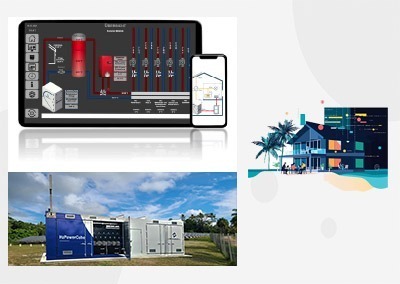













A bank on a Pacific Island, equipped with servers, UPS, office PCs, laptops, CCTV and Building Automation was exposed to various power quality issues, which impacted the stability and reliability of its electrical infrastructure.
Here are some potential problems: Voltage Fluctuations, Harmonics, Surges and Spikes, Power Interruptions, Voltage Sags and Dips and Frequency Variations.
How we Completed
It's crucial to establish a comprehensive power quality monitoring system and conduct periodic power quality audits, and train personnel to identify and respond to power quality issues promptly.
The Mission
The mission for the power quality improvement project in the bank aims to ensure a robust and reliable electrical infrastructure, fostering operational continuity, data integrity, and customer service excellence. The project seeks to:
Establish Proactive Monitoring:
- Implement a comprehensive power quality monitoring system to detect, analyze, and address issues in real-time.
- Enable proactive maintenance and rapid response to emerging power quality concerns
Enhance Operational Reliability:
- Ensure a stable and consistent power supply to minimize disruptions.
- Mitigate the risk of unexpected downtime, protecting critical systems and services.
Safeguard Electronic Equipment:
- Implement measures to protect the equipment from voltage fluctuations, harmonics, surges, and other power quality issues.
- Prolong the lifespan of electronic devices and reduce maintenance costs associated with equipment failures.
Ensure Customer Service Excellence:
- Guarantee uninterrupted access to banking services for customers by minimizing the impact of power-related disruptions.
- Enhance customer satisfaction by providing a seamless and reliable banking experience.
By achieving these objectives, the power quality improvement project aims to create a secure, resilient, and efficient electrical environment within the bank branch, supporting its core mission of delivering reliable financial services to customers while minimizing the impact of power-related challenges.
Final Results
The implementation of a Power Quality Monitoring and Building Automation System with BACnet connectivity to the UPS (Uninterruptible Power Supply) yielded several positive outcomes for the bank. Some of the key final results include:
Real-Time Monitoring:
- The system enabled real-time monitoring of power quality parameters, providing continuous insights into voltage levels, harmonics, surges, and other relevant data.
Proactive Issue Identification:
- The Power Quality Monitoring System allowed for the early identification of power quality issues, enabling proactive measures to address potential problems before they could impact critical systems.
Improved Operational Reliability:
- The implementation enhanced the overall reliability of the bank branch's electrical infrastructure. By minimizing power disruptions and downtime, operational efficiency was improved, ensuring continuous banking services.
Data Integrity and Security:
- With a robust power quality monitoring system in place, the risk of data corruption and loss due to power-related issues was significantly reduced, safeguarding the integrity and security of sensitive financial data.
BACnet Connectivity to UPS:
- The integration with BACnet connectivity to the UPS allowed for seamless communication between the Power Quality Monitoring System and the UPS. This integration enhanced the overall control and management of the UPS, ensuring a coordinated response to power quality events.
Remote Monitoring and Control:
- The Building Automation System enabled remote monitoring and control of various electrical and HVAC systems. This capability enhanced the bank's ability to manage and respond to power quality issues from a centralized location.
Compliance and Reporting:
- The system facilitated compliance with regulatory standards by providing detailed reports on power quality parameters. This not only ensured adherence to industry regulations but also supported the bank in demonstrating its commitment to best practices.
Enhanced Employee Awareness:
- Employee training on the new system improved awareness of power quality issues, empowering staff to respond effectively to potential challenges. This cultural shift contributed to a more proactive approach to electrical system management.
Cost Savings and Risk Mitigation:
- By minimizing equipment failures, reducing downtime, and optimizing energy consumption, the bank realized cost savings and mitigated risks associated with financial losses, reputational damage, and operational disruptions.
In summary, the implementation of a Power Quality Monitoring and Building Automation System with BACnet connectivity to the UPS resulted in a more resilient, efficient, and secure electrical infrastructure for the bank branch, aligning with the project's objectives and contributing to the overall success of the initiative.

Launched
2021 Q1

Platform
NBnexus - GridVis

Client
Bank - Pacific Islands
Check out our
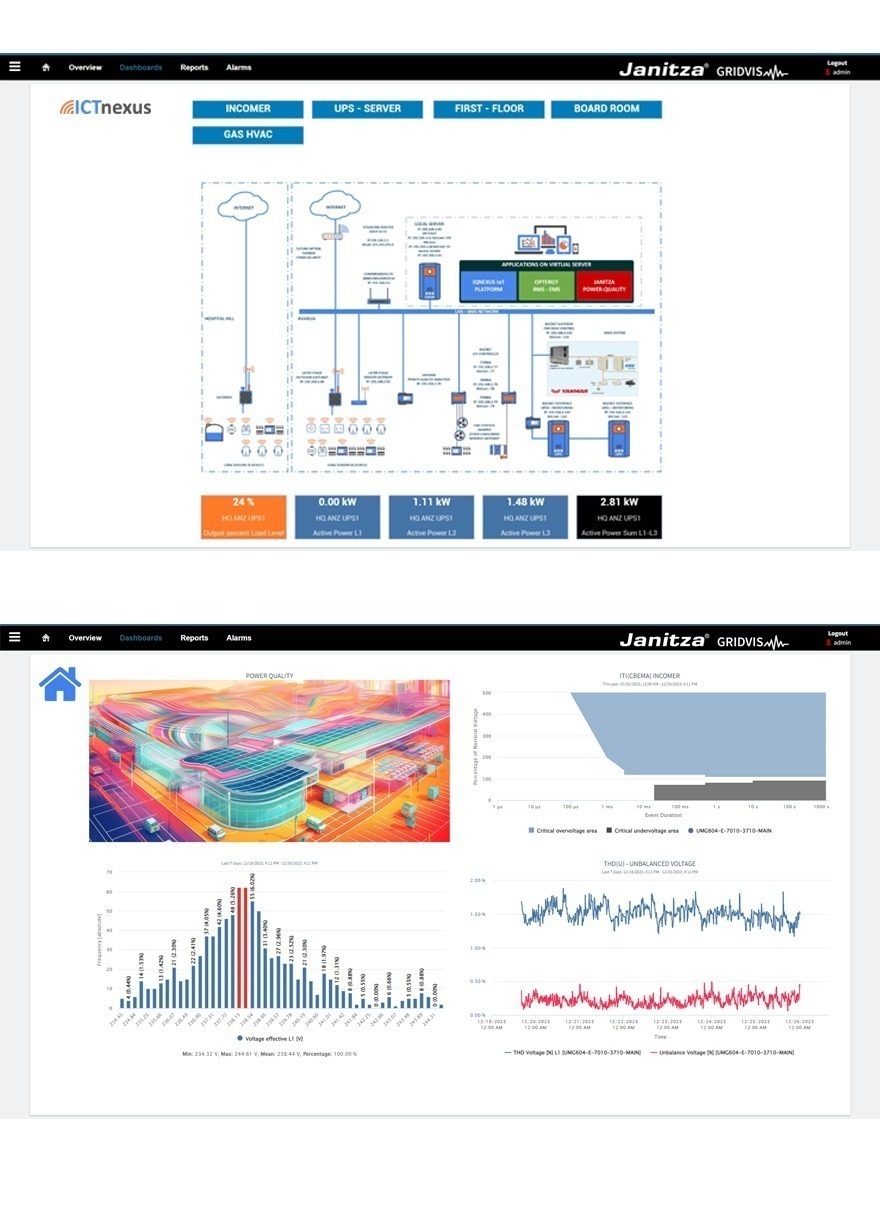
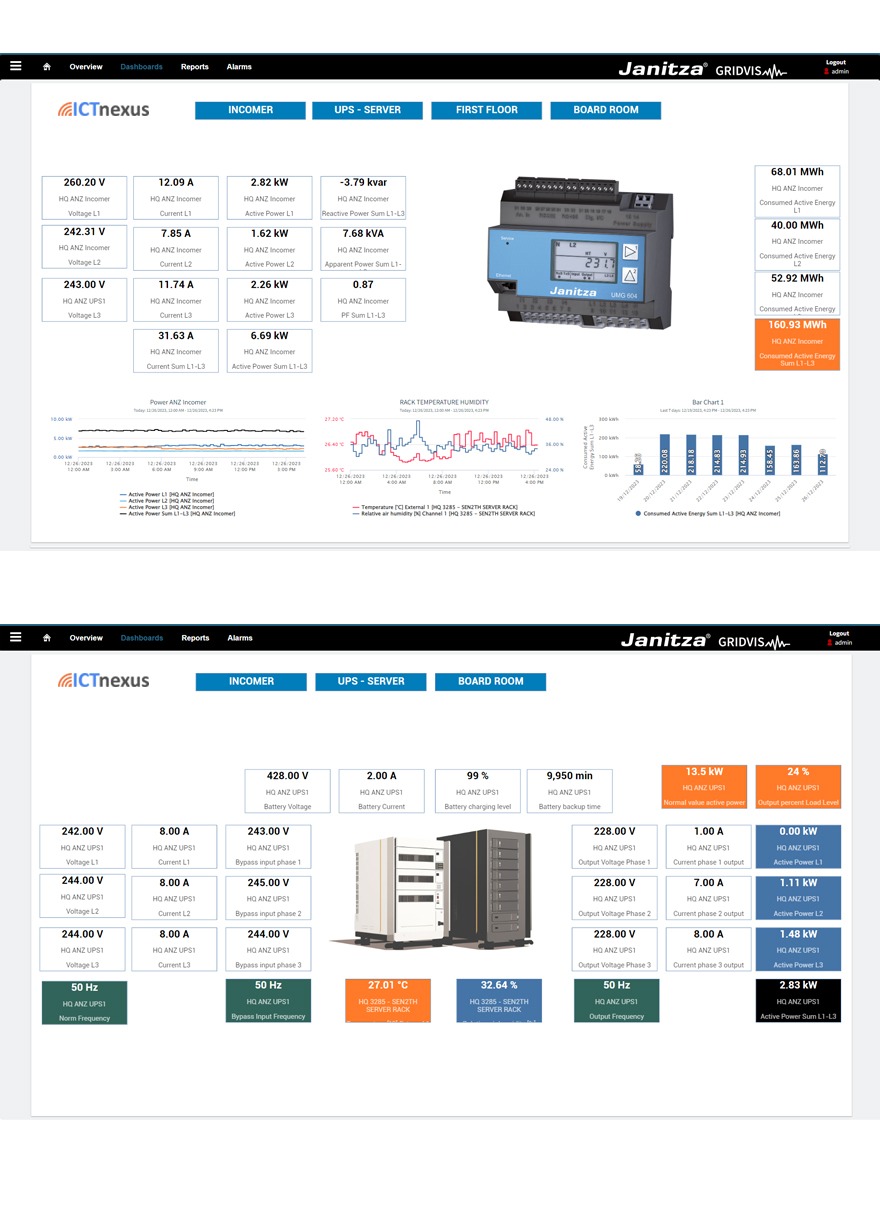
Dashboards
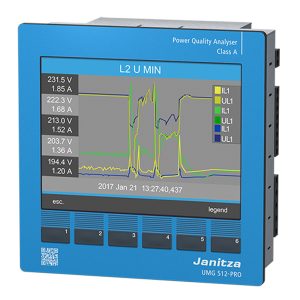
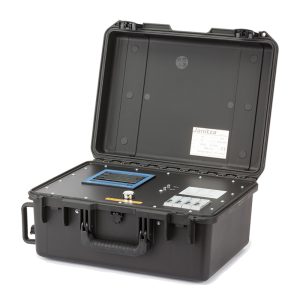
Certified measuring methods with high measuring accuracy are used to check the power quality according to EN 50160 at the power transfer point as well as in the internal power grid according to EN 61000-2-4.
Featured Products
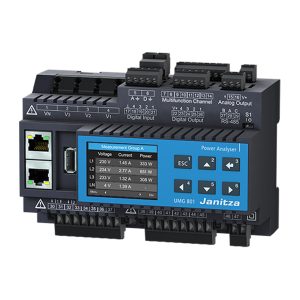
Power Quality Measurement according to EN50160 and EN61000-2-4
More Related Projects